Shelf Life
Your postcode shouldn’t determine your shelf life.
But in the UK, it does.
Right now, people in some parts of the UK are living up to 18 years less than in others.
That’s up to 18 years of life marked down. Not because of bad luck or individual choices alone, but because of conditions that we are born, live and work in: whether we can afford to heat our homes, breathe clean air, access decent housing, find secure work, and have enough money to live well.
This life expectancy gap is unjust and avoidable. Change is possible if government start taking these issues seriously.
Discover the life expectancy in your postcode
Your postcode. Reduced to clear?
Use our life expectancy calculator by entering your postcode and see how it stacks up against the national average.
Our calculator is powered by the latest official data from the Office for National Statistics (ONS), the Northern Ireland Statistics and Research Agency (NISRA), and National Records of Scotland (NRS).
What shapes health and wellbeing?
Good health starts with the basics we all need: a safe home, secure work, enough money to cover everyday costs, and supportive local communities. But right now, too many of us don’t have what we need to be healthy. When these basics are missing – when homes are damp, work is insecure, or money is tight — it becomes harder for people to stay healthy and live well, inequalities widen and lives are cut short.
It’s not simply a North-South divide; health inequalities can be found in every corner of the UK. Behind the national statistics are communities living very different realities, often just streets apart.
LIFE EXPECTANCY
Marked down by inequality
The human cost of health inequalities
Explore stories from people across the UK whose chances of a long, healthy life have been shaped by the conditions around them.
-
 Tina
South Tyneside
Tina
South Tyneside
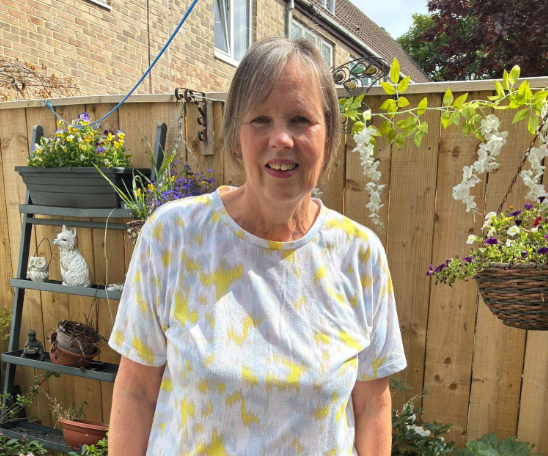
Health inequality is a reality, not just statistics. In some areas of the UK the life expectancy gap is growing, but in today’s society you would expect the opposite. From my own experience of suffering from long-term illness, fibromyalgia; and losing my husband recently aged just 65, I know first-hand that heath inequity matters.
-
 Fe
Leeds
Fe
Leeds
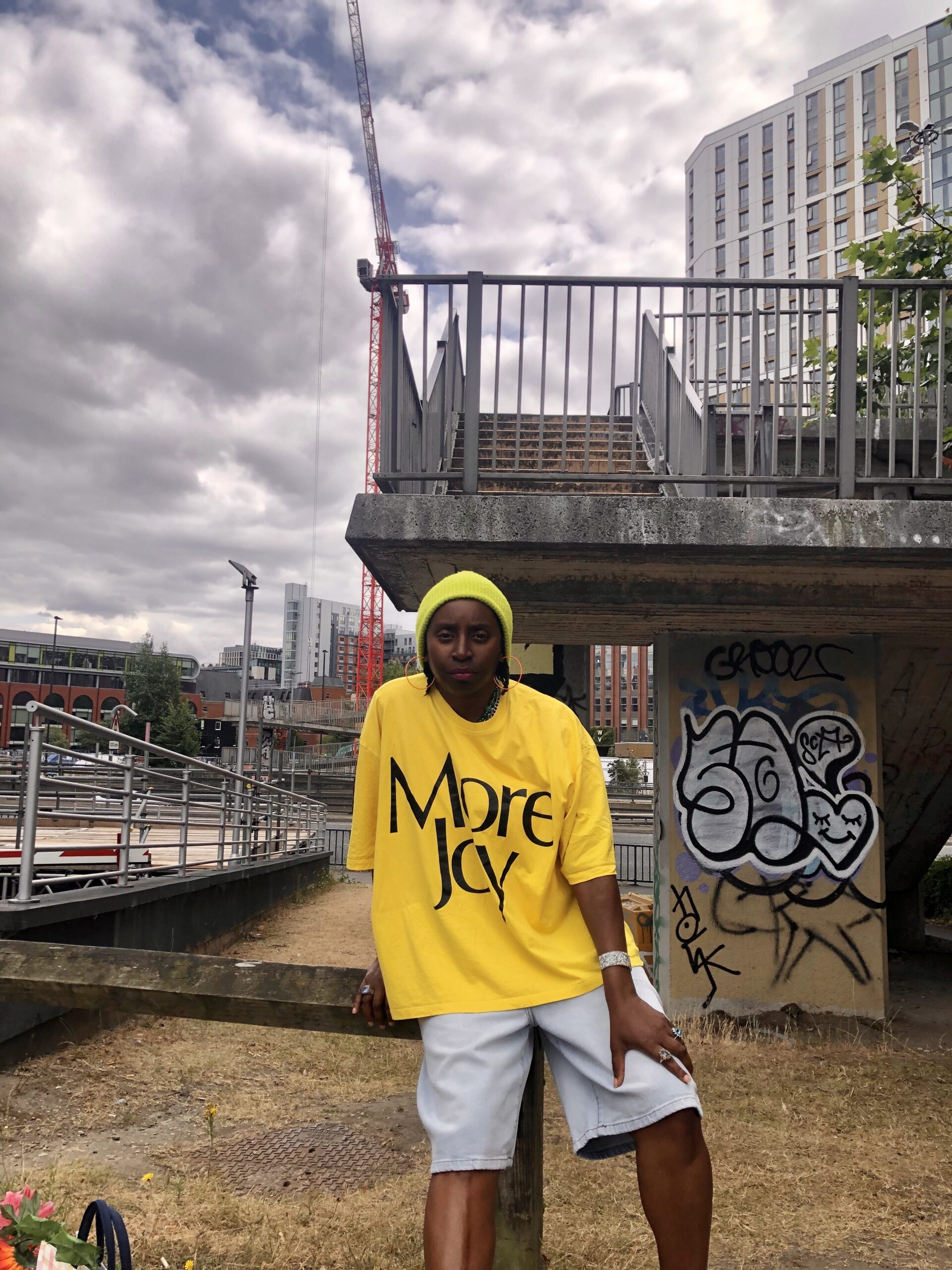
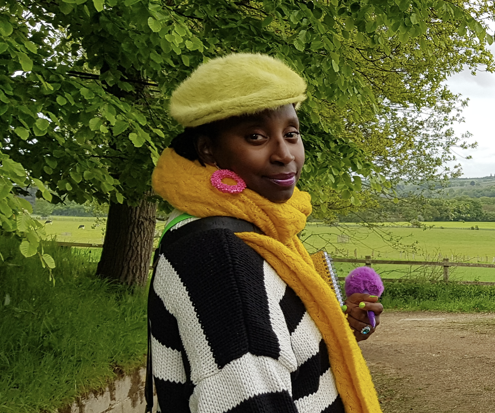
I’m a happy person by nature, but even I now feel the negative impact of more people and no green spaces on my mental wellbeing and breathing.
-
 Helen
Wakefield
Helen
Wakefield
I’m 61 now. That’s the current healthy life expectancy across the UK. Is it all downhill from here? All the building blocks need to be in place, at the same time, and available to all of us.
SEE WHO'S BACKING OUR CAMPAIGN
-
This campaign is deeply personal to me. I don't just see the impact of health inequalities in my work as a GP, I've lived them too. Growing up working class in inner-city Bradford, I know what it feels like to have the odds stacked against you and how difficult life can be when you're focused on simply getting through each day. Today, I see these same challenges affecting many of my patients. I see people living in damp homes, struggling with financial insecurity or juggling multiple jobs, and I see the impact that can have on their health. We're very good at treating illness, but health starts long before someone walks into a GP surgery. It is shaped by things like our homes, jobs, education and local environment.
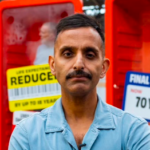 Dr Amir KhanNHS GP, TV presenter and author
 -
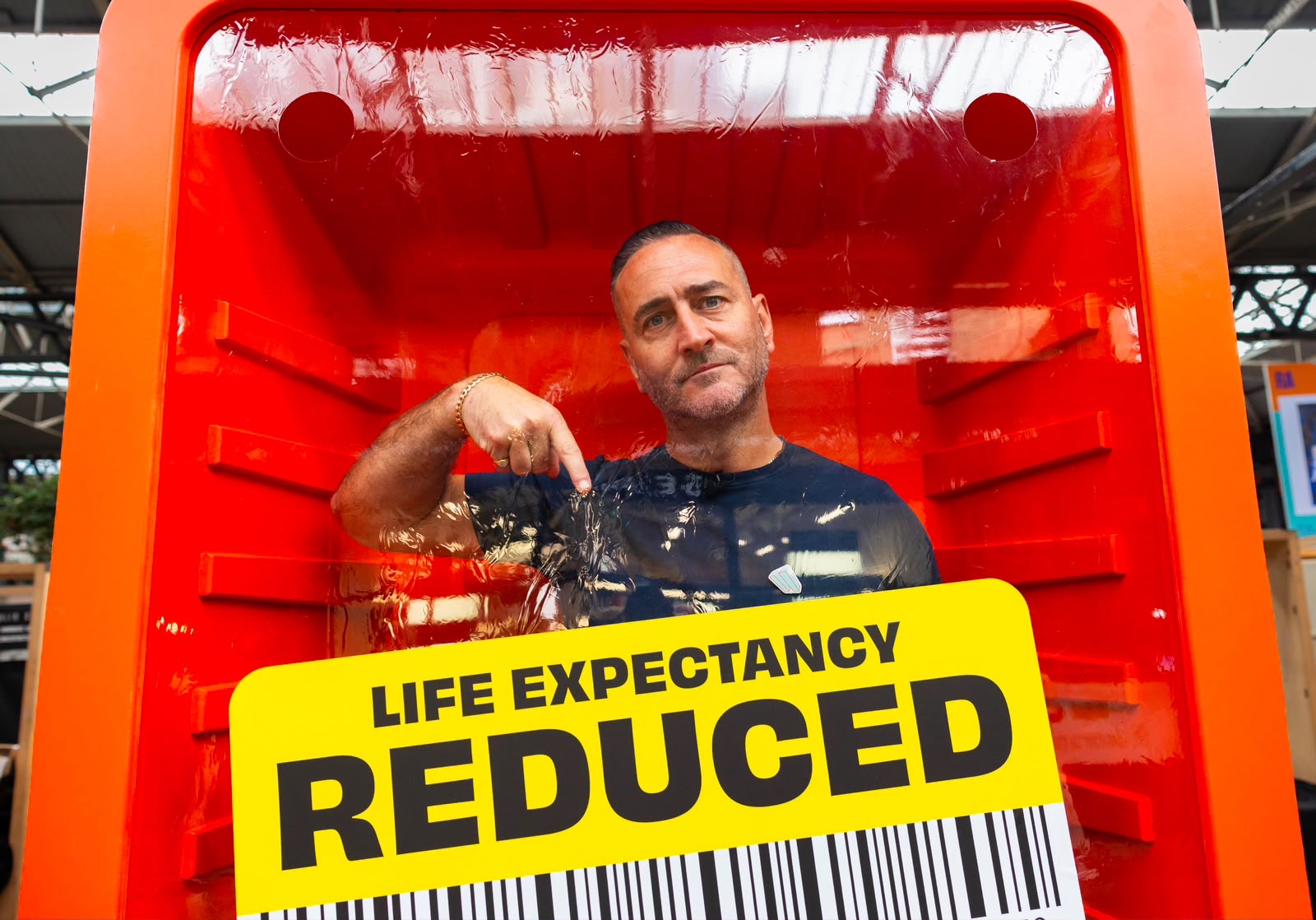
It's shocking to think that there's an 18-year gap in life expectancy between some communities across the UK. Having grown up on a council estate in Stockport, that’s difficult to get my head around. Two people from different parts of the UK can be working hard, doing their best, and yet one could still live so many years fewer than the other. When you see the difference between communities that can be just a few miles apart, the issue becomes impossible to ignore.
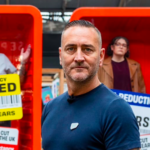 Will MellorActor and TV presenter
 -
As the MP for Glasgow North East, I see the impact of health inequalities every day. I regularly meet people doing everything they can to build a good life for themselves and their families, only to face barriers to good health completely outside their control. No community should be expected to simply accept shorter lives and poorer health. We need government to put health equity at the heart of policymaking and deliver meaningful change for communities that have been left behind for far too long.
 Maureen BurkeMP for Glasgow North East
 -
As a doctor, I see first-hand how the conditions in which we live, work and grow affect our health, and nowhere is the inequity starker than in respiratory health. Poor housing with damp and mould can worsen lung conditions, while bad air quality is linked to heart and lung disease. Financial insecurity also takes a serious toll on people’s mental and physical health. Over time, these pressures build up, leading to worse health and shorter lives.
 Dr Nick HopkinsonMedical Director at Asthma + Lung UK
What can the government do to close the gap?
Over the past decade, our nation’s health has gone backwards, and inequalities have widened. But with bold, coordinated action, the government can make better health a national priority.
We’re calling for a change in the law to make health a shared responsibility across all government departments so that it’s considered in every major policy decision – from housing and employment to transport and education.
The Health Bill is already working its way through Parliament, but we know it can go further by:
-
Creating a shared responsibility to improve health and reduce inequalities Improving health shouldn’t sit with just one department – it’s something the whole government needs to take responsibility for. A clear, shared duty would make sure every part of government is working towards the same goal, with policies that support better health rather than pull in different directions. It would also help central government work more effectively with new strategic authorities, giving them the support they need to tackle inequalities locally.
-
Producing a clear, joined-up plan across government We need a cross-government strategy that brings everything together – setting priorities, aligning action, and keeping progress on track. Modelling this on the Environment Act framework would give it real structure and staying power, helping ensure that improving health and tackling inequalities isn’t a one-off effort, but a long-term, coordinated plan.
-
Enforcing long-term targets To make meaningful progress, the government needs clear, long-term goals for improving health and reducing inequalities. Having clear targets helps everyone stay focused on what really matters and makes it easier to track whether we’re making a difference.
Just as the government sets long-term targets for issues like the environment, we want to see similar goals for the nation’s health. The exact targets wouldn’t be set in the Bill itself, but the government would be required to work with experts and the public to decide what they should be.
We believe these targets should cover a range of areas, including:
- Reducing preventable deaths
- Improving mental health and wellbeing
- Helping children get the best start in life
- Supporting people to stay healthy through their working years
- Promoting healthy ageing
- Narrowing the gap in healthy life expectancy between different communities and regions
-
Being open and accountable about progress It’s important that progress is visible and that the government is held to account. That means regularly reporting to parliament and the public, as well as drawing on independent experts to provide challenge and insight. Being transparent about what’s working, and what isn’t, will help build trust and keep momentum behind the agenda.
-
Considering health in every major decision Big policy decisions – from housing to transport to jobs – can have a huge impact on people’s health. By rolling out Health Impact Assessments across major policies, as is already happening in Wales, we can make sure those impacts are considered upfront. This helps avoid decisions that unintentionally widen inequalities and instead supports choices that improve health over the long term.
What can I do?
Your MP wants to know what matters to you. Sending an email might feel like a small action, but it’s the first spark in a chain reaction — from inbox, to Parliament, to policy change.
Right now, we’ve reached an important milestone in our campaign: our proposed amendments to the Health Bill have now been debated in Parliament. This is a significant step towards securing the cross-government action needed to close the UK’s 18-year life expectancy gap and give everyone a fair chance of a healthy life.
But we can’t stop here. We need to keep telling MPs to tackle health inequalities.
Use your voice to get health inequalities on your MP’s agenda by writing to them.
Ask your MP to support a change in the law to help close the life expectancy gap.

Meet our members and supporters
Health Equals is a coalition of over 130 organisations who are all working in their own way to address the building blocks of health.














-
Where did you get the life expectancy data from? Health Equals draws on publicly available data from the Office for National Statistics (ONS), the Northern Ireland Statistics and Research Agency (NISRA), and National Records of Scotland (NRS). For England and Wales, the data is taken from the ONS Health state life expectancy estimates for Middle Layer Super Output Areas (MSOAs), 2019 to 2023. For Northern Ireland, the data comes from NISRA’s Life expectancy at birth for District Electoral Areas, 2021 to 2023. For Scotland, the data is taken from NRS’s Life expectancy at birth for Intermediate Zones, 2019 to 2023. These are the most recent small-area life expectancy estimates available across the UK. The data has been analysed by the Health Foundation.
Our interactive postcode lookup tool provides life expectancy estimates at postcode district level. These are calculated by averaging the life expectancy estimates for the relevant small geographic areas within each postcode district, including Middle Layer Super Output Areas (MSOAs) in England and Wales, Intermediate Zones in Scotland, and District Electoral Areas in Northern Ireland.
The analysis uses official life expectancy data from the UK’s national statistics agencies using localised data based on small areas: – MSOAs for England and Wales (5,000-15,000 people), Intermediate Zones for Scotland (2,500-6,000 people) and District Electoral Areas for Northern Ireland (15,000-50,000 people). We used the latest data available at these levels and compared areas in the highest and lowest 0.2% of the UK population by life expectancy to calculate the gap. This allows people to see how health outcomes don’t just vary between countries or the North and South but vary between neighbourhoods. This isn’t a national average – it’s a highly localised picture of inequality.
To account for outliers at the most extreme ends of the range, we calculate the average life expectancy of the 10 postcode districts with the highest life expectancy and the 10 postcode districts with the lowest life expectancy. The difference between these averages is used to estimate the gap in life expectancy between the UK’s highest and lowest life expectancy areas, which is currently estimated to be 18 years. As a result, the difference in life expectancy between specific postcodes may be larger than the reported gap.
-
Why is life expectancy different in different areas? Life expectancy is shaped by more than healthcare alone. The conditions in which we live, work and grow up, often called the social determinants of health, can have a major impact on both how long and how well we live. Factors such as income, housing quality, air pollution, employment and access to services can affect health over time, creating significant differences in life expectancy between communities. Health Equals believes everyone should have a fair opportunity to live a long and healthy life, regardless of where they live.
While there are broad regional differences across the UK, life expectancy inequalities exist in every part of the country. There are more and less deprived neighbourhoods right across the country, and even within constituencies, and there can be significant gaps even between neighbouring communities. For example, government data shows a 14-year difference in life expectancy between Far Headingley and Hyde Park in Leeds, despite the areas being just 1.5 miles apart.
-
Which regions or parts of the UK are worst affected by lower life expectancy and why? The data shows that some of the lowest life expectancy figures are found in communities facing long-term social and economic disadvantages, while some of the highest are predictably in more affluent areas. The key point is that this isn’t about geography itself, it’s about unequal access to the basics we need to keep healthy, such as decent housing, secure work, clean air and financial stability.
People aren’t living shorter lives because of bad luck or just personal choices; they’re living shorter lives because the odds are stacked against them and the right policies aren’t in place.
-
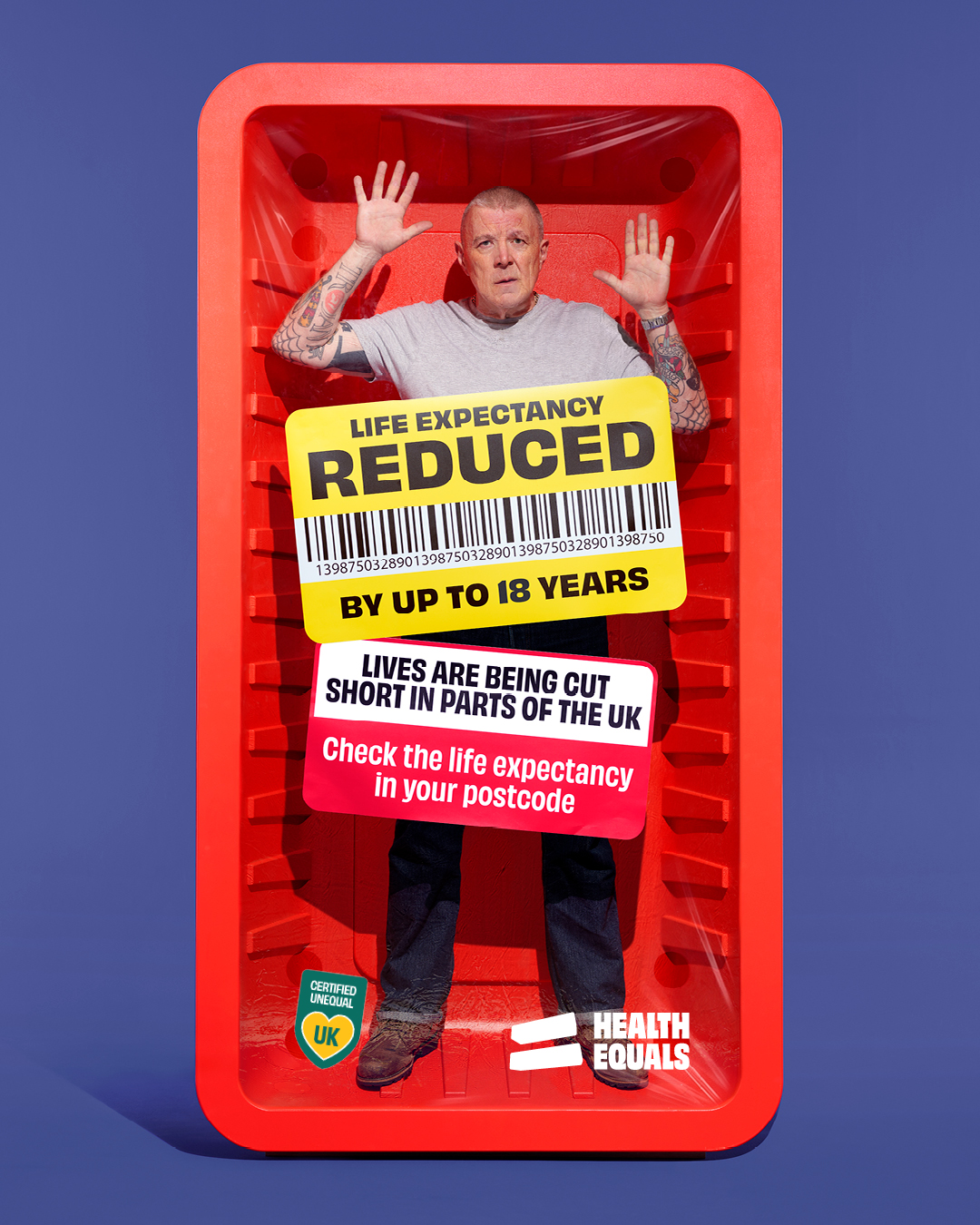
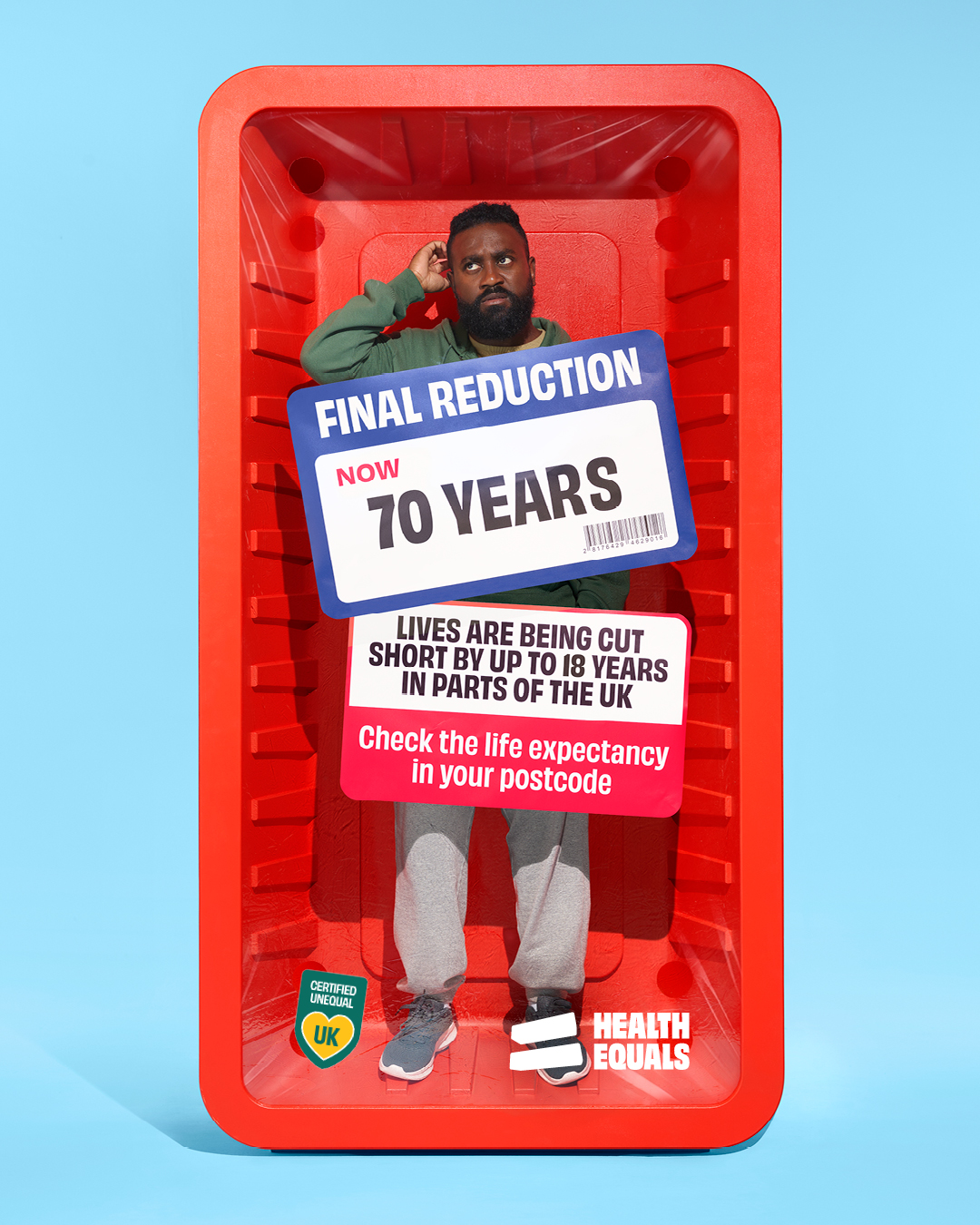
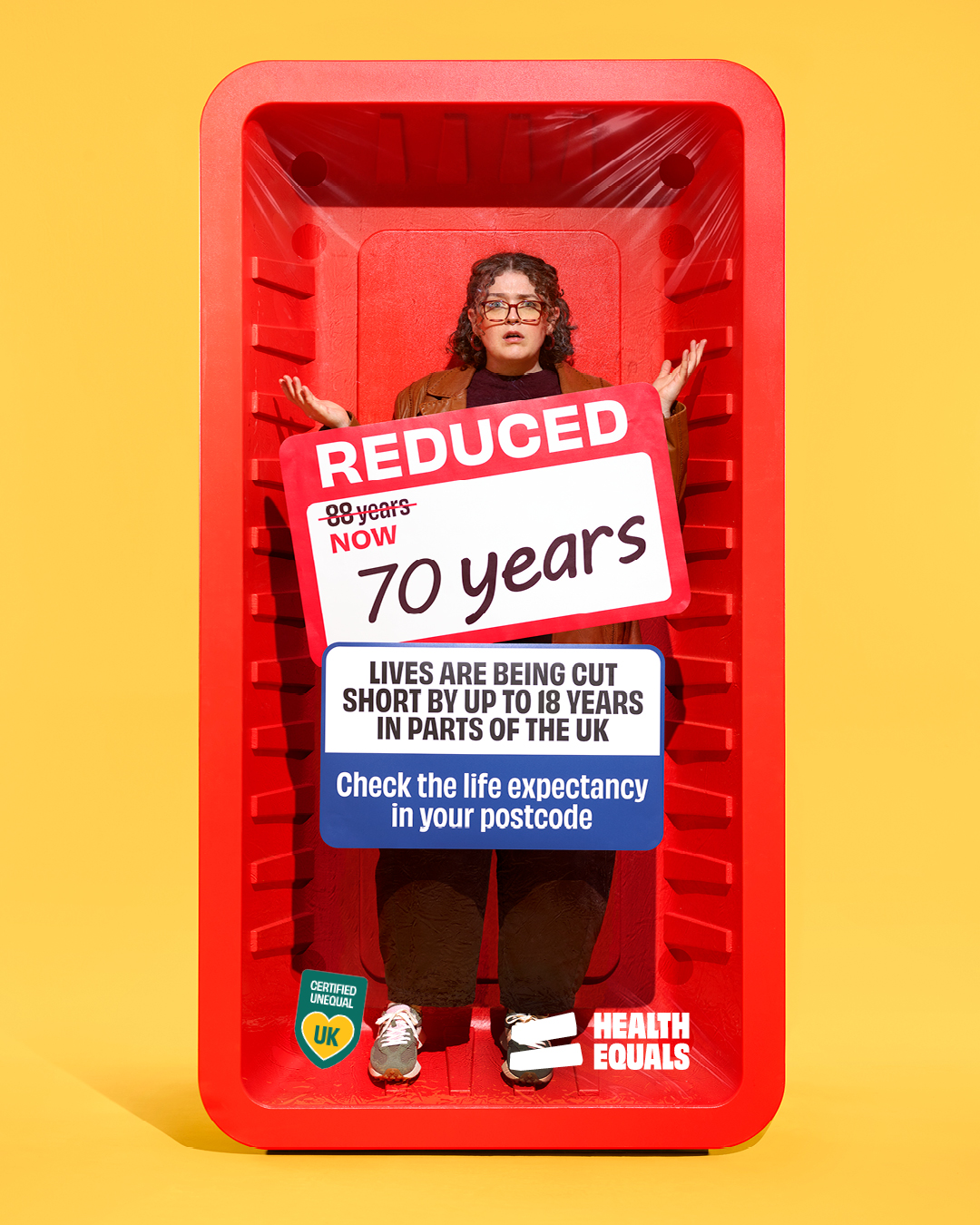
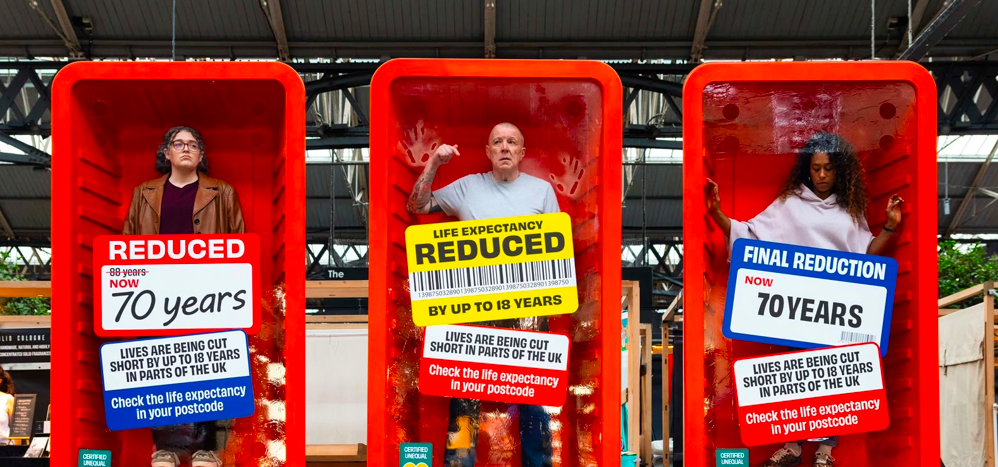
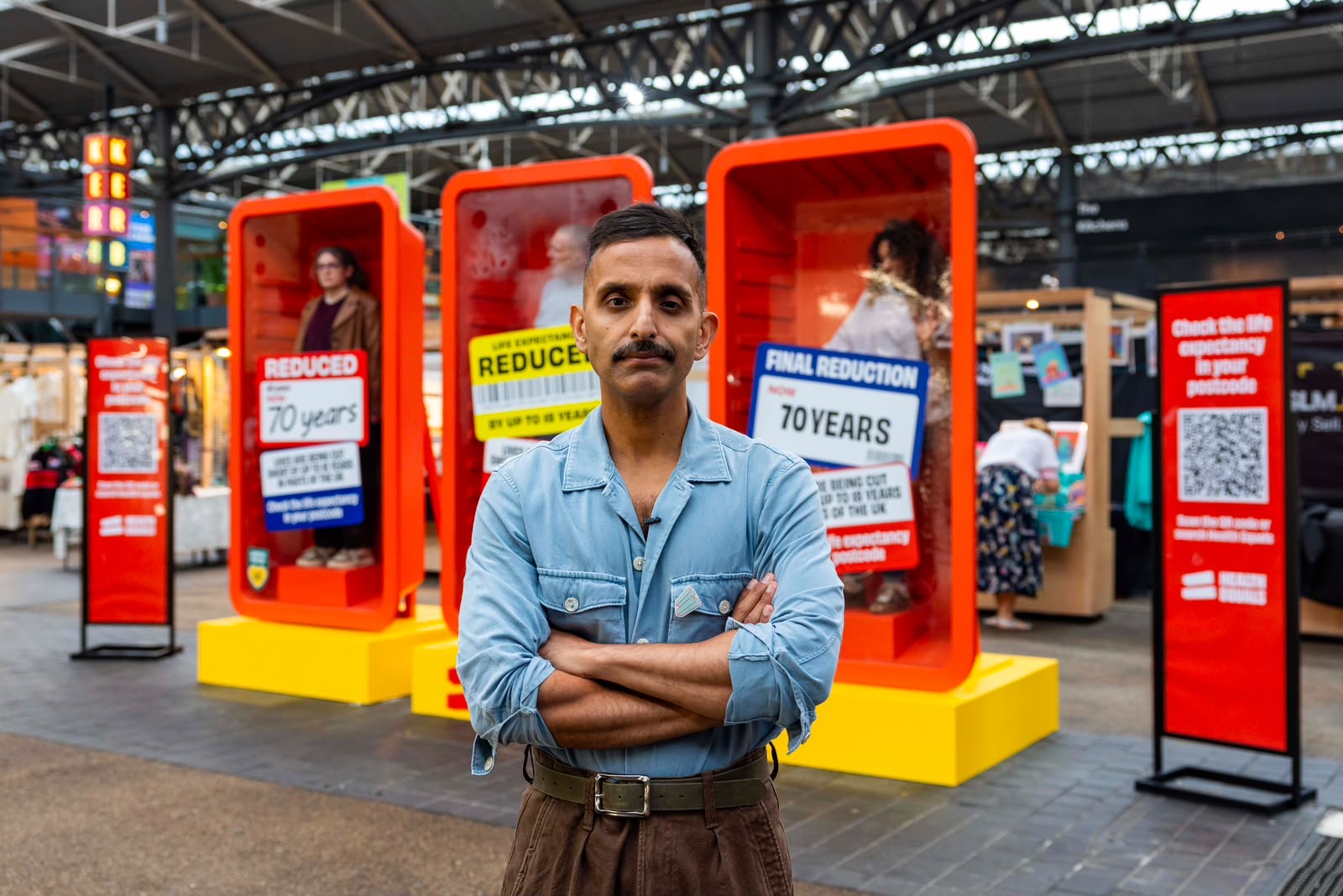
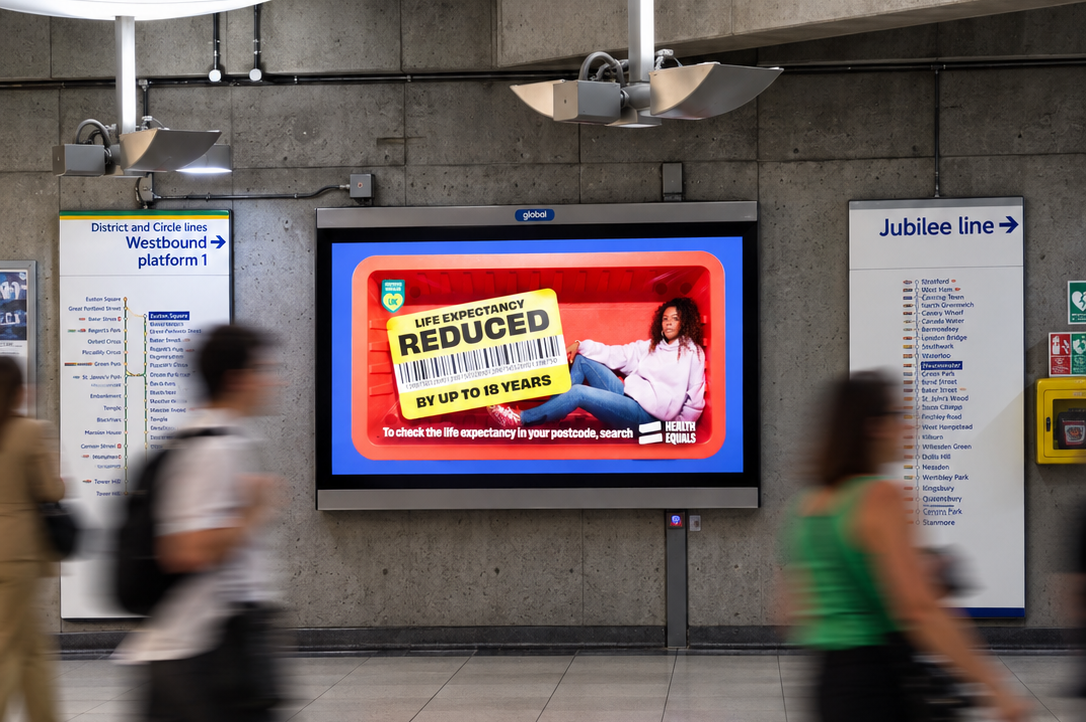
Why did you choose such a bold approach to the campaign? The scale of the issue is simply too significant to ignore. With an 18-year gap in life expectancy between different communities, we wanted to create a campaign that would stop people in their tracks and encourage them to think differently about what these statistics really mean in human terms.
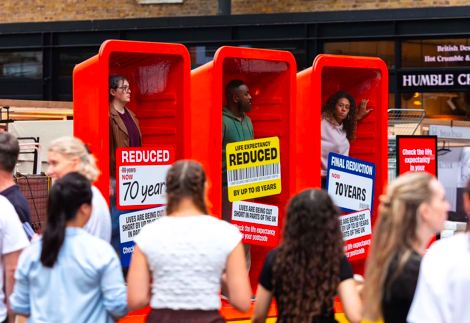
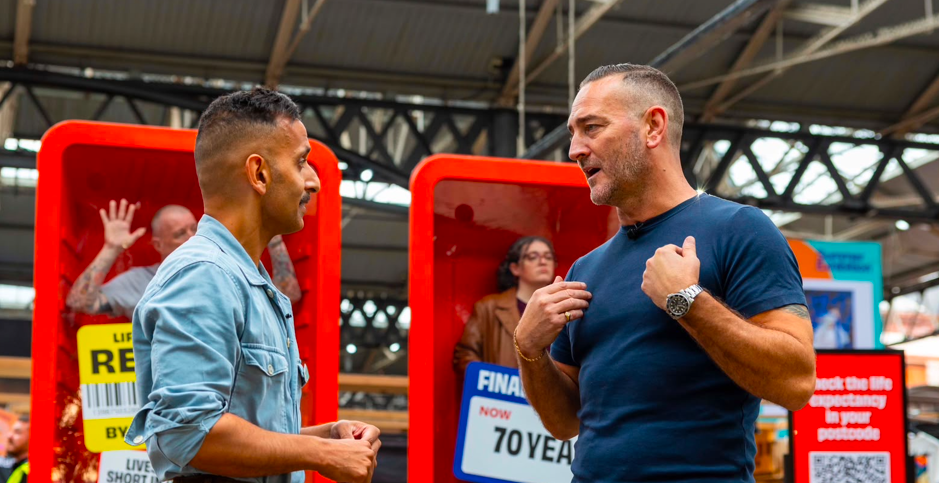
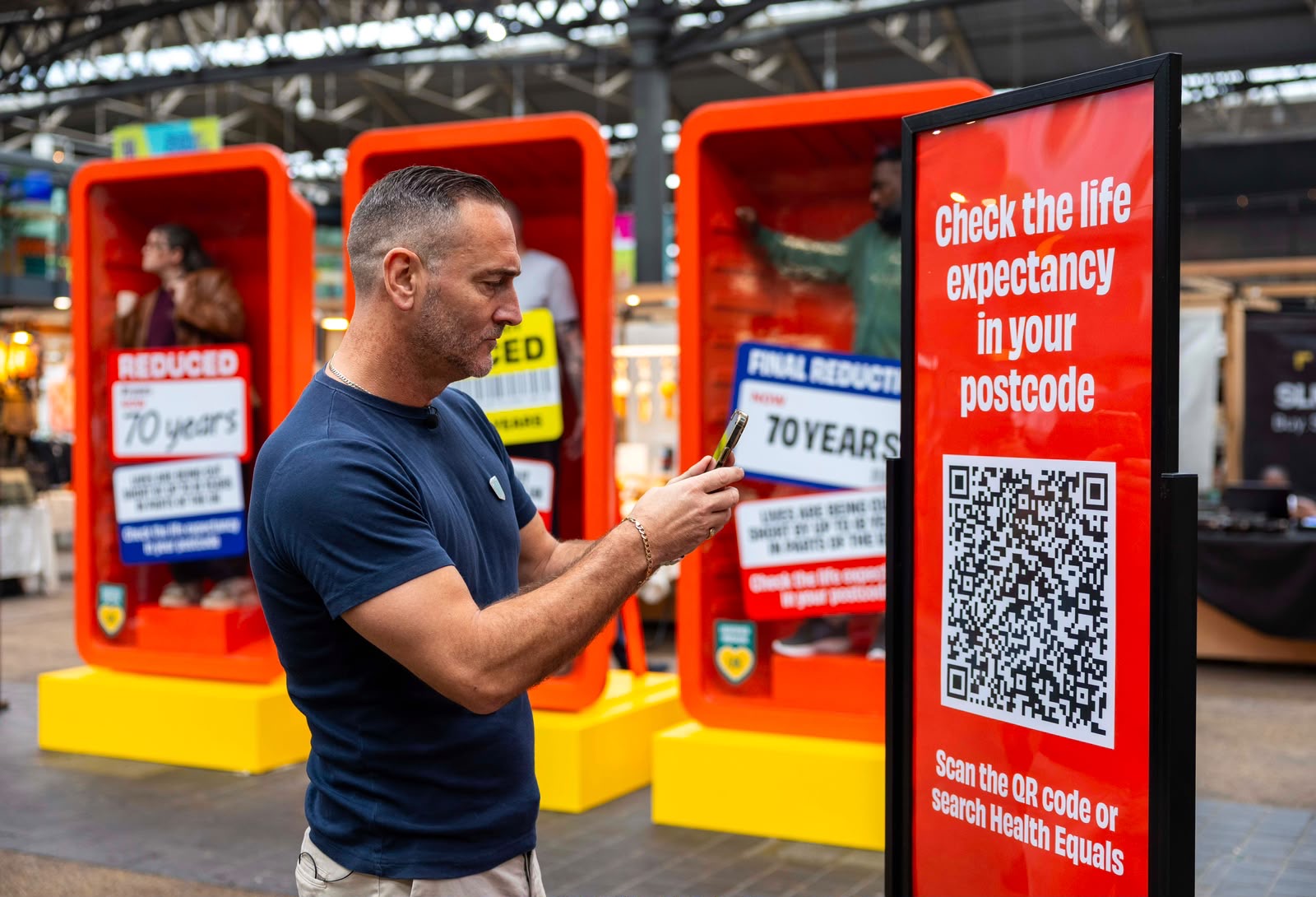
The concept behind the campaign takes something we encounter every day, supermarket packaging and expiry dates, and uses it to highlight life expectancy inequality in a way that is both familiar and striking. By depicting people packaged like supermarket products, each marked with a reduced label based on real life expectancy data, the campaign turns an abstract and often overlooked issue into something immediate and impossible to ignore.
-
What is the stunt about? We wanted to take our campaign to the streets and educate as many people people about the life expectancy gap in the UK, and that some determinants of good health don’t rely solely on personal action and behaviours. Our goal was to get the public to support us in calling on government to deliver a cross-government strategy to tackle health inequalities.
-
What's the Health Bill? The Health Bill is a law, currently being passed through Parliament, that sets out plans to reform the way the NHS in England works and review what the Secretary of State (SoS) for Health is responsible for.
We’ve put forward amendments to the Bill:
- Ensure that preventing ill health is given the same importance as treating it
- Require the Government to produce a joined-up plan across every relevant department, to tackle health inequalities and reduce premature mortality
- Consider health in every major policy decision
If these are passed by April 2027, then the SoS is also responsible not just for the health service but also works across government to improve all aspects of health and reduce inequalities.
-
Will a change in the law make any difference? We’ve seen what happens when Parliament does act decisively. Faced with the environmental crisis, it passed the Climate Act, setting targets, creating legal duties and establishing independent oversight. Whilst it has its limitations and drawbacks, that framework has at least helped lock in progress across political cycles – incrementally moving the dial and keeping the issue visible.
People’s health deserves the same level of ambition and protection.
-
Where can I go for support related to the issues raised? We understand that this is a sensitive matter and could impact people in different ways. If you’ve been affected, please visit our support page.