06 November 2025
What Hazmat Loungewear taught us about bold, effective disruption
05 February 2026

Campaigns Manager
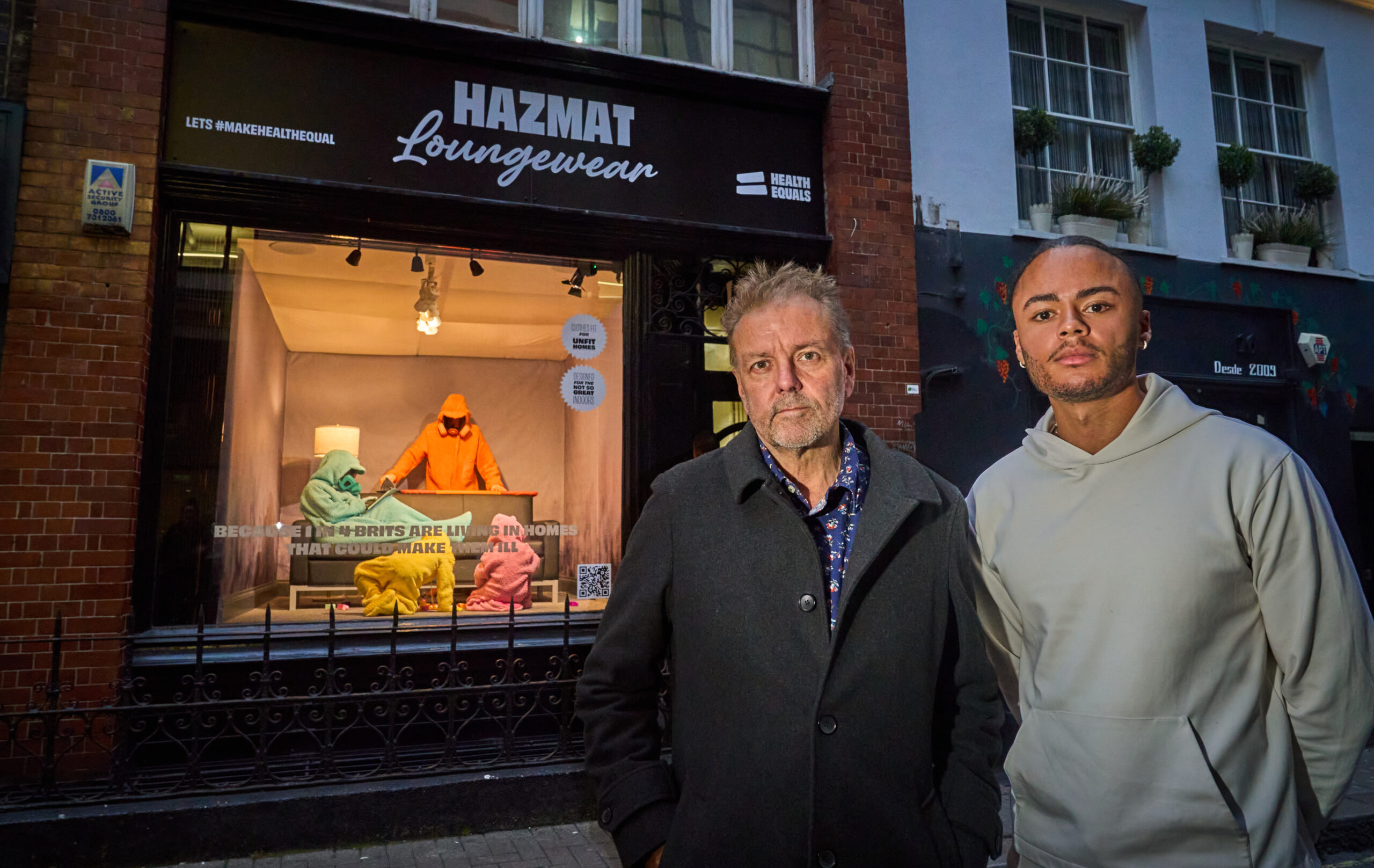
Hazmat Loungewear was designed to do something deliberately different. By spotlighting non-decent homes and using an absurd solution to expose a very real problem, it became our most disruptive campaign to date.
It also gave us space to reflect. Not just on impact, but on how bold campaigns happen, the risk they carry, and how to ensure disruption is purposeful rather than performative.
Creating the conditions
From the outset, Hazmat Loungewear was built to cut through. We wanted to prioritise emotion over explanation, aiming to stop people in their tracks rather than persuade them slowly. In a crowded digital environment where most people were going to see our campaign, the goal was simple, to break through apathy, not compete within it.
Bold campaigning also needs permission, and in our case, that came from leaders who understood that real cut-through wouldn’t sit neatly within familiar formats of raising awareness around health inequalities, and that uncertainty is part of the deal.
From bold ideas to responsible risk
Boldness alone isn’t a strategy. For disruption to work, it must be intentional and responsible – especially when the issues are real and affect the health of millions of people across the country. Although the idea was compelling early on, we spent months pressure-testing it by listening to members and advisors, the public and working with people most affected by non-decent housing, to understand how it might land.
The campaign could divide opinion, which forced some honest conversations about risk. But we agreed that discomfort doesn’t mean failure, and that avoiding it usually means avoiding impact. Committing meant sitting with uncertainty, because without that, disruptive work rarely cuts through.
From concept to craft
The idea was initially visualised through AI-generated imagery, allowing us to explore and test quickly. But as the campaign developed, we faced a choice: keep it synthetic or make it real.
We chose to make it real. Producing the loungewear meant more time, budget and risk but it grounded the campaign in human craft and physical reality. Poor-quality housing isn’t abstract – it’s lived. The execution needed to reflect that.
That decision paid off. Bringing the Hazmat suits into the real world clarified the campaign’s core tension – an absurd solution delivered with sincerity – while building trust that the issue was serious and urgent. It also reinforced that while AI can speed up ideation, it can’t replace craft, investment, and care when credibility matters.
What we learned about disruption
Hazmat Loungewear sharpened our thinking about what disruption needs to do. In fast-scrolling environments, most people aren’t thinking about health inequalities and the impact of non-decent homes. The first job of any campaign is to earn a pause.
The campaign also reinforced a well-established truth that attention is emotional before it’s rational. When the visuals worked, it made people stop, feel something, and want to understand why it mattered. Only then could we invite them into a deeper conversation and towards action.
We saw this in strong engagement, a surge in new visitors to our website, and hundreds of emails sent to MPs. It reinforced a final learning: disruption works best when it’s purposeful. Not just eye-catching but grounded in the issue and paired with a clear next step: in this case, putting pressure on government to prioritise health inequalities.
Ultimately, Hazmat Loungewear reminded us that effective disruption isn’t just about creative bravery. It depends on trust, good judgement, and systems that allow organisations to take risks without losing their grip on responsibility.
If you’d like to learn more, explore our campaigns or sign up to our mailing list.